

- Analisis
- Analisis Teknikal
Nikkei Analisis Teknikal - Nikkei Berniaga: 2020-04-10
Nikkei (225), Indeks pasaran Saham Ringkasan Analisis Teknikal
Above 19854.6
Buy Stop
Below 17529.9
Stop Loss

| Penunjuk | Isyarat |
| MACD | Buy |
| Stochastic | berkecuali |
| Donchian Channel | berkecuali |
| Fractals | Buy |
| Parabolic SAR | Buy |
| MA(200) | Sell |
Nikkei (225), Indeks pasaran Saham Analisis carta
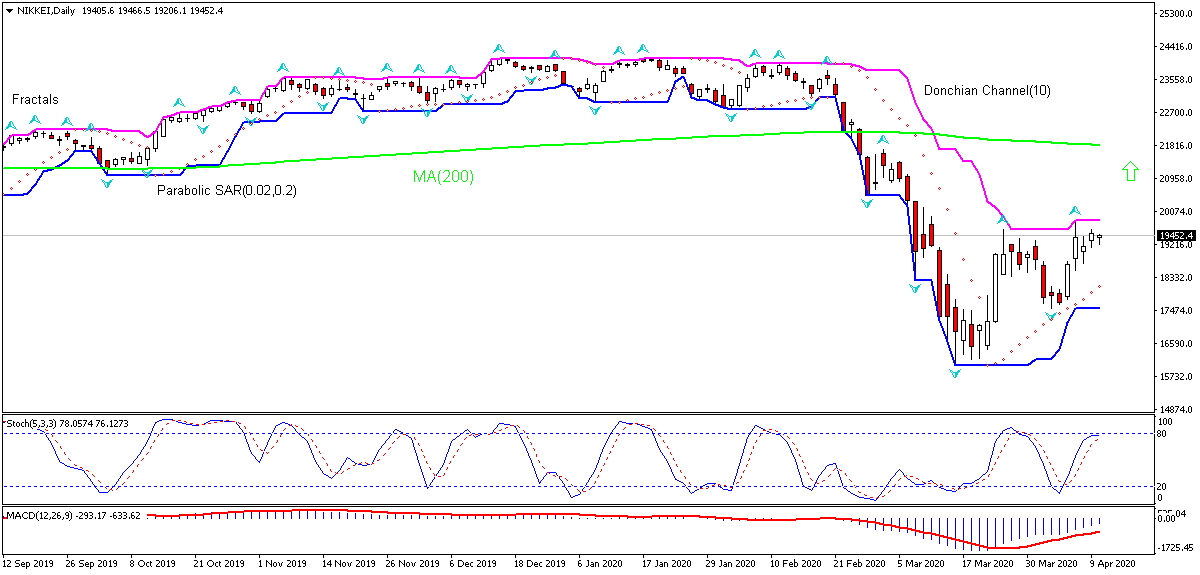
Nikkei (225), Indeks pasaran Saham Analisis teknikal
On the daily timeframe the Nikkei: D1 is rising toward the 200-day moving average MA(200) after hitting 37-month low in mid-March. We believe the bullish momentum will continue after the price breaches above the upper boundary of Donchian channel at 19854.6. A level above this can be used as an entry point for placing a pending order to buy. The stop loss can be placed below 17529.9. After placing the order, the stop loss is to be moved every day to the next fractal low, following Parabolic signals. Thus, we are changing the expected profit/loss ratio to the breakeven point. If the price meets the stop loss level (17529.9) without reaching the order (19854.6), we recommend cancelling the order: the market has undergone internal changes which were not taken into account.
Analisis Asas bagi Indeks - Nikkei (225), Indeks pasaran Saham
Japan’s economic data have been mixed in recent weeks. Will the NIKKEI rebound continue?
Recent Japanese economic data were mixed. Current account surplus widened in February while machinery orders decline accelerated. The Tankan index for big manufacturers' sentiment fell to a seven-year low of -8 in the first quarter of 2020 from 0 in the prior period, though it still came above market expectations of -10. At the same time large firms indicated plans to rase capital expenditures by 1.8%, down from 6.8% in the previous quarter but above a 1.1% expected decline. And while machinery orders decline accelerated in March to 2.4% over year from 0.3% in February, the decline was smaller than feared. Meanwhile machine tool orders decline accelerated sharply next month to 40.8% over year from 29.6% in February. However, Japan’s government unveiled a monetary and fiscal stimulus package on April 7 to combat coronavirus impact. The total package is worth 108 trillion yen ($990 billion), equal to 20% of Japan’s gross domestic product, with direct fiscal spending amounting to 39.5 trillion yen, or about 7% of the GDP. These measures, together with monetary stimulus program by other developed economies including the US and European Union, buoyed investors’ confidence, leading to recovery in equity market.
Terokai kami
Syarat Dagangan
- Tersebar dari 0.0 pip
- 30,000+ Instrumen Perdagangan
- Tahap Henti Keluar - Hanya 10%
Bersedia untuk Berdagang?
Buka Akaun Perhatian:
Kajian berikut adalah berdasarkan maklumat kognitif dan diterbitkan secara percuma. Semua maklumat, terkandung dalam semakan semasa, diperolehi dari sumber umum, diakui sebagai tidak tepat sepenuhnya. Oleh yang demikian tidak dijamin, maklumat yang dipaparkan adalah tepat dan lengkap sepenuhnya. Ulasan kemudian tidak dikemaskini. Segala maklumat pada setiap ulasan, seperti ramalan, petunjuk, carta dan seumpama dengannya, hanya disertakan bagi tujuaan rujukan, dan bukan sebagai nasihat kewangan atau cadangan. Kesemua teks dan sebahagian darinya, dan termasuk juga carta, sesama sekali tidak boleh digunakan sebagai cadangan untuk membuat sebarang transaksi untuk sebarang saham. Syarikat IFC Markets dan pekerjanya tidak akan bertanggungjawab di bawah mana-mana keadaan untuk segala tindakan yang diambil oleh sesiapa selepas atau semasa ulasan.